

Cypress Lake Landscape Services
Sign up now for autumn service and let your yard shine through the season!
Get a Free QuoteLandscape Services Tailored for Cypress Lake, Florida
Expert Lawn Care for Cypress Lake’s Unique Environment
Cypress Lake’s subtropical climate brings warm, humid summers and mild winters, creating both opportunities and challenges for residential landscaping. Homeowners in neighborhoods like Myerlee and Whiskey Creek often contend with summer drought stress, which can leave lawns parched and patchy without attentive irrigation. Shaded lots from mature oaks and pines, especially near Rutenberg Park, require specialized turf and plant selections to thrive in lower light conditions. Additionally, sloped properties along the Caloosahatchee River are prone to soil erosion, demanding tailored solutions for stability and drainage. For more information about the area’s natural features and community resources, visit the official Cypress Lake website.
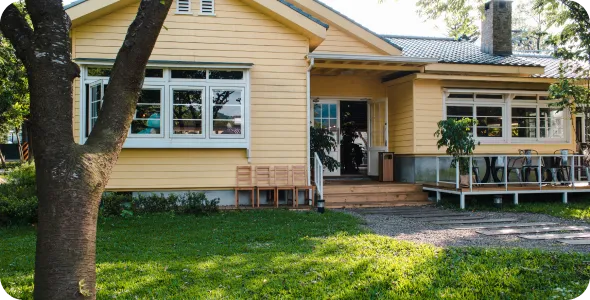
Our Cypress Lake Landscaping & Yard Care Services
Cypress Lake Gardening Services
Cypress Lake Yard Clean Up
Why Choose Cypress Lake Landscape Services

Cypress Lake Homeowners Trust Us
-
Expert Lawn Maintenance
-
Reliable Scheduling
-
Competitive Pricing
-
Professional Team
-
Satisfaction Guarantee
-
Personalized Service
Contact Your Local Cypress Lake Public Works or Solid Waste Department for Green Waste Info
Cypress Lake is an unincorporated census-designated place in Lee County, so green waste services fall under Lee County Solid Waste Division. Yard waste—including grass clippings, palm fronds, branches, and shrub trimmings—is collected curbside on a regular weekly schedule. Branches must be cut to four feet or shorter and bundled or placed in containers no heavier than fifty pounds. Plastic bags are prohibited for yard waste; use paper bags or open containers instead. Lee County operates the Lee County Solid Waste Facility on Buckingham Road, accepting vegetative debris from residents with proof of residency. Commercial landscapers must use approved disposal facilities and may incur tipping fees. After hurricanes or tropical storms, Lee County activates special vegetative debris collection routes. It is unlawful under the Clean Water Act and local MS4 stormwater rules to blow or dump clippings, fertilizer granules, or sediment into streets, swales, canals, retention ponds, or storm drains.
Lee County Solid Waste Division
1500 Monroe Street, Fort Myers, FL 33901
Phone: (239) 533-8000
Official Website: Lee County Solid Waste Division
Lawn Care Regulations & Permits in Cypress Lake, FL
Lee County enforces a rainy-season fertilizer blackout from June 1 through September 30, prohibiting nitrogen and phosphorus application on turf during the peak wet season. Year-round, fertilizers must contain at least 50% slow-release nitrogen, and a ten-foot no-fertilizer setback from all water bodies applies. These rules align with Florida Statutes 403.9337 and the Urban Turf Fertilizer Rule for Home Lawn Fertilization. Commercial fertilizer applicators must hold certification under Florida Statutes 482.1562. Pesticide applicators require licensing through the Florida Department of Agriculture and Consumer Services - Pesticide Applicator Certification and Licensing, governed by Florida Pesticide Law - Chapter 487. Pest control operators must also comply with Florida Department of Agriculture and Consumer Services - Licensing and Certification. The South Florida Water Management District governs irrigation; residential watering is limited to two days per week with no watering between 10 a.m. and 4 p.m., and rain sensors are required on automatic systems per South Florida Water Management District - Landscape Irrigation. Lee County noise ordinances restrict power equipment operation before 7 a.m. and after 9 p.m. on weekdays. Commercial operators must maintain a Lee County business tax receipt and carry liability insurance.
Florida Department of Agriculture and Consumer Services
3125 Conner Boulevard, Tallahassee, FL 32399
Phone: (850) 617-7700
Official Website: Florida Department of Agriculture and Consumer Services
South Florida Water Management District
3301 Gun Club Road, West Palm Beach, FL 33406
Phone: (561) 686-8800
Official Website: South Florida Water Management District
What Neighborhoods Do We Serve in Cypress Lake, FL?
Cypress Lake spans a diverse mix of Gulf Coast Southwest Florida neighborhoods, each with distinct lawn care demands shaped by sandy and shell-influenced fill soils, high water tables, canal proximity, and coastal humidity.
- Parker Lakes — A master-planned community with interconnected retention lakes and St. Augustinegrass-dominant lawns. Sandy fill soils drain quickly but nutrient leaching is a concern. HOA standards require consistent turf appearance, and fertilizer setbacks from lake banks are critical.
- The Vines — Established single-family homes with mature live oak and palm canopy. Shade-tolerant St. Augustinegrass cultivars like 'Palmetto' or 'CitraBlue' perform best. Older irrigation systems may need calibration to prevent overwatering and fungal pressure.
- Cypress Lake Country Club Estates — Golf-adjacent properties with bermudagrass and zoysiagrass in premium settings. Shell-influenced soils raise pH, potentially locking out iron and micronutrients. Drainage swales connect to the broader canal network, requiring careful fertilizer management.
- Brandywine — Mid-century ranch-style homes on larger lots with bahiagrass and St. Augustinegrass mixes. Sandy flatwoods soils and a high water table create dollarweed and sedge pressure in low-lying areas. Mole cricket activity is common in open-sun bahiagrass sections.
- Whiskey Creek — A well-established community bordering canal systems flowing toward the Caloosahatchee estuary. Waterfront lots face salt intrusion risk during dry-season low flows. Stormwater pond banks require low-input, Florida-Friendly plantings rather than heavily fertilized turf.
- Colonial Country Club — Gated community with premium zoysiagrass and St. Augustinegrass lawns, screened-pool microclimates, and strict HOA landscape standards. Imported fill soils vary in quality, and irrigation zones must be calibrated to avoid runoff into retention areas.
- Tanglewood / Winkler Road Corridor — Mixed residential and commercial parcels with variable lot sizes. Older infrastructure means some properties rely on swales rather than curbed stormwater systems. Chinch bug pressure in full-sun St. Augustinegrass is a recurring summer challenge.
Partnering With Cypress Lake's Stormwater, Environmental, or Sustainability Office
As an unincorporated area, Cypress Lake falls under Lee County's stormwater and environmental programs. Lee County's Natural Resources Division oversees canal maintenance, stormwater pond management, and water quality monitoring throughout the Cypress Lake drainage basin, which ultimately connects to the Caloosahatchee River estuary and the Gulf of Mexico. All lawn care operations must comply with Florida DEP - Municipal Separate Storm Sewer Systems (MS4) and Florida DEP - NPDES Stormwater Program requirements. Sustainable practices we align with include:
- Following Florida-Friendly Landscaping™ Program principles for reduced-input beds near canals and ponds
- Grasscycling to return nitrogen naturally and reduce green waste volume
- Using micro-irrigation in landscape beds to minimize overspray and runoff
- Maintaining rain sensors and smart controllers to comply with district watering rules
- Protecting canal banks, retention ponds, and swales from fertilizer and sediment loading
- Selecting native and adapted plants for buffer zones adjacent to waterways
Lee County Natural Resources Division
1500 Monroe Street, Fort Myers, FL 33901
Phone: (239) 533-8000
Official Website: Lee County Natural Resources
Florida Department of Environmental Protection
2600 Blair Stone Road, Tallahassee, FL 32399
Phone: (850) 245-2118
Official Website: Florida Department of Environmental Protection
Top Cypress Lake Lawn Problems (and How We Solve Them)
Cypress Lake's Gulf Coast climate—high humidity, sandy soils, summer deluges, and salt-influenced air—drives a specific set of turf challenges. Solutions follow UF/IFAS Extension - Lawn Maintenance and Best Management Practices for Your Lawn guidelines:
- Chinch bugs in St. Augustinegrass — Southern chinch bugs thrive in hot, dry-stressed turf. Proper irrigation, mowing at 3.5–4 inches, and targeted insecticide applications by licensed operators reduce outbreaks. Resistant cultivars like 'CitraBlue' offer long-term management.
- Large patch fungus — This cool-season disease appears in fall and spring when soil temperatures drop below 80°F. Avoid nitrogen fertilization in late fall, reduce irrigation frequency, and apply preventive fungicides only when cultural controls fail.
- Mole crickets — Tawny mole crickets damage bahiagrass and bermudagrass by tunneling through sandy soils. Soap-flush monitoring in spring identifies nymphs early; beneficial nematodes and targeted baits provide effective control.
- Standing water and dollarweed — Flat topography and high water tables create persistently wet zones. Core aeration, proper grading, and reduced irrigation frequency discourage dollarweed. Herbicide applications must avoid runoff into adjacent swales.
- Salt and wind stress — Coastal humidity and occasional salt-laden storm winds cause leaf tip burn, especially on inland-adapted cultivars. Seashore paspalum or salt-tolerant St. Augustinegrass cultivars perform better on exposed lots. Post-storm freshwater rinsing helps flush salt from foliage.
- Take-all root rot — This fungal disease attacks St. Augustinegrass roots in poorly drained, overwatered soils. Raising mowing height, reducing irrigation, and applying manganese-based treatments per UF/IFAS recommendations support recovery.
- Nematode damage in sandy soils — Sting and root-knot nematodes thin turf in Cypress Lake's deep sands. Soil testing through the UF/IFAS Gardening Solutions - Lawns network confirms diagnosis; organic matter topdressing and nematode-tolerant cultivars are primary management tools.
What Makes Lawns in Cypress Lake Different From the Rest of Florida?
Cypress Lake sits in USDA Hardiness Zone 10a within the Gulf Coast / Southwest Florida region, giving it a near-tropical growing environment distinct from Central Florida's inland sandy-lake communities and North Florida's frost-prone landscapes:
- Soil profile — Sandy and shell-influenced fill soils with alkaline tendencies differ from the deep acidic sands of Central Florida or the marl and limestone of South Florida's southeast coast. The USDA Web Soil Survey shows Immokalee, Oldsmar, and Boca series soils dominating the area, all with high water tables.
- Water table and drainage — Cypress Lake's flat coastal-plain topography and canal-dependent drainage create persistent wet-zone challenges absent in rolling North Florida terrain.
- Rainy season intensity — June through October delivers 35+ inches of rain, concentrating nutrient runoff risk during the fertilizer blackout period—a sharper regulatory constraint than in Panhandle communities with more distributed rainfall.
- Salt and hurricane exposure — Proximity to the Gulf of Mexico means tropical storm winds carry salt spray inland, stressing turf in ways that inland I-4 corridor cities never experience.
- Turf dominance — St. Augustinegrass is overwhelmingly dominant, with zoysiagrass in premium settings and bahiagrass on lower-input lots—contrasting with North Florida's centipedegrass prevalence.
- Year-round growth — Unlike Panhandle lawns that go dormant for months, Cypress Lake turf grows nearly year-round, demanding consistent mowing, fertility, and pest monitoring across all seasons.
Supporting Local Events in Cypress Lake With Lawn Expertise
We coordinate with Lee County Parks & Recreation and local organizations to support community green spaces:
- Athletic field preparation for youth soccer and baseball leagues at Cypress Lake parks
- Landscape support for seasonal festivals and farmers markets along Winkler Road and US 41 corridors
- School grounds maintenance coordination with Lee County School District campuses including Cypress Lake High School and Cypress Lake Middle School
- Post-hurricane vegetative debris cleanup in partnership with Lee County emergency management
- Volunteer cleanup support along canal banks and retention pond perimeters
- HOA common-area coordination for seasonal landscape refreshes in gated communities
- Support for community center and library landscape maintenance
Lee County Parks & Recreation
3410 Palm Beach Boulevard, Fort Myers, FL 33916
Phone: (239) 533-7275
Official Website: Lee County Parks & Recreation
National Weather Service - Miami Office
11691 SW 17th Street, Miami, FL 33165
Phone: (305) 229-4522
Official Website: National Weather Service Offices
Eco-Friendly Landscaping Backed by Cypress Lake's Florida-Friendly and Water-Saving Initiatives
Our practices align with Lee County's water quality goals and the Florida-Friendly Landscaping™ Program:
- Smart irrigation: WiFi-enabled controllers with rain and soil-moisture sensors, zone-by-zone calibration, and compliance with South Florida Water Management District two-day-per-week schedules
- Reduced-chemical approaches: Integrated pest management, compost topdressing to build soil biology in sandy soils, lower-phosphorus fertilizer formulations, and pollinator-friendly native plantings in bed areas
- Nutrient runoff prevention: Deflector shields on spreaders near pavement, immediate sweeping of granules from hardscapes, and strict adherence to the June–September fertilizer blackout
- Carbon footprint reduction: Battery-powered mowers and blowers on residential routes, local mulch reuse from Lee County storm-debris chipping programs, grasscycling on every mow, and optimized routing to reduce fuel consumption
- Water conservation: Micro-irrigation for shrub and flower beds, turf reduction in low-use side yards replaced with Florida-Friendly groundcovers, and reclaimed water awareness where Lee County Utilities provides it
UF/IFAS Lee County Extension
3406 Palm Beach Boulevard, Fort Myers, FL 33916
Phone: (239) 533-7513
Official Website: UF/IFAS Lee County Extension
U.S. Environmental Protection Agency, Region 4
61 Forsyth Street SW, Atlanta, GA 30303
Phone: (404) 562-9900
Official Website: U.S. Environmental Protection Agency, Region 4
Proudly Serving These Streets and Areas in Cypress Lake
We provide comprehensive lawn care across Cypress Lake's neighborhoods, organized by corridor:
- US 41 / South Tamiami Trail Corridor: Parker Lakes, Colonial Country Club, Cypress Cove, Peppertree Pointe, commercial frontage parcels
- Winkler Road Corridor: Brandywine, Tanglewood, Winkler Estates, Whiskey Creek adjacent sections, Cypress Lake High School vicinity
- Ben C. Pratt / Six Mile Cypress Parkway Area: The Vines, Cypress Woods, Six Mile Cypress Slough Preserve buffer neighborhoods, newer subdivisions east of I-75
- Cypress Lake Drive / Country Club Corridor: Cypress Lake Country Club Estates, Cypress Lake Gardens, Lakewood, canal-front properties
- Summerlin Road Corridor: Colonial Country Club south sections, Cross Creek, gated communities near Sanibel Causeway approach
- Notable landmarks and green spaces: Rutenberg Park, Six Mile Cypress Slough Preserve, Cypress Lake golf courses, Veterans Park, canal systems connecting to the Caloosahatchee
- School zones: Cypress Lake High School, Cypress Lake Middle School, Tanglewood Elementary, Villas Elementary
Properties adjacent to canals, retention ponds, the Six Mile Cypress Slough, or designated flood zones require strict adherence to fertilizer setbacks, stormwater buffer maintenance, and Florida-Friendly planting standards along water edges.
Lee County Development Services
1500 Monroe Street, Fort Myers, FL 33901
Phone: (239) 533-8585
Official Website: Lee County Development Services
Lee County Utilities
1500 Monroe Street, Fort Myers, FL 33901
Phone: (239) 533-8845
Official Website: Lee County Utilities